Instance details
Once you deploy a virtual machine it shows up on My Instances. Each instance is a card. Compact view is the summary; Details expands connection info.
Compact view
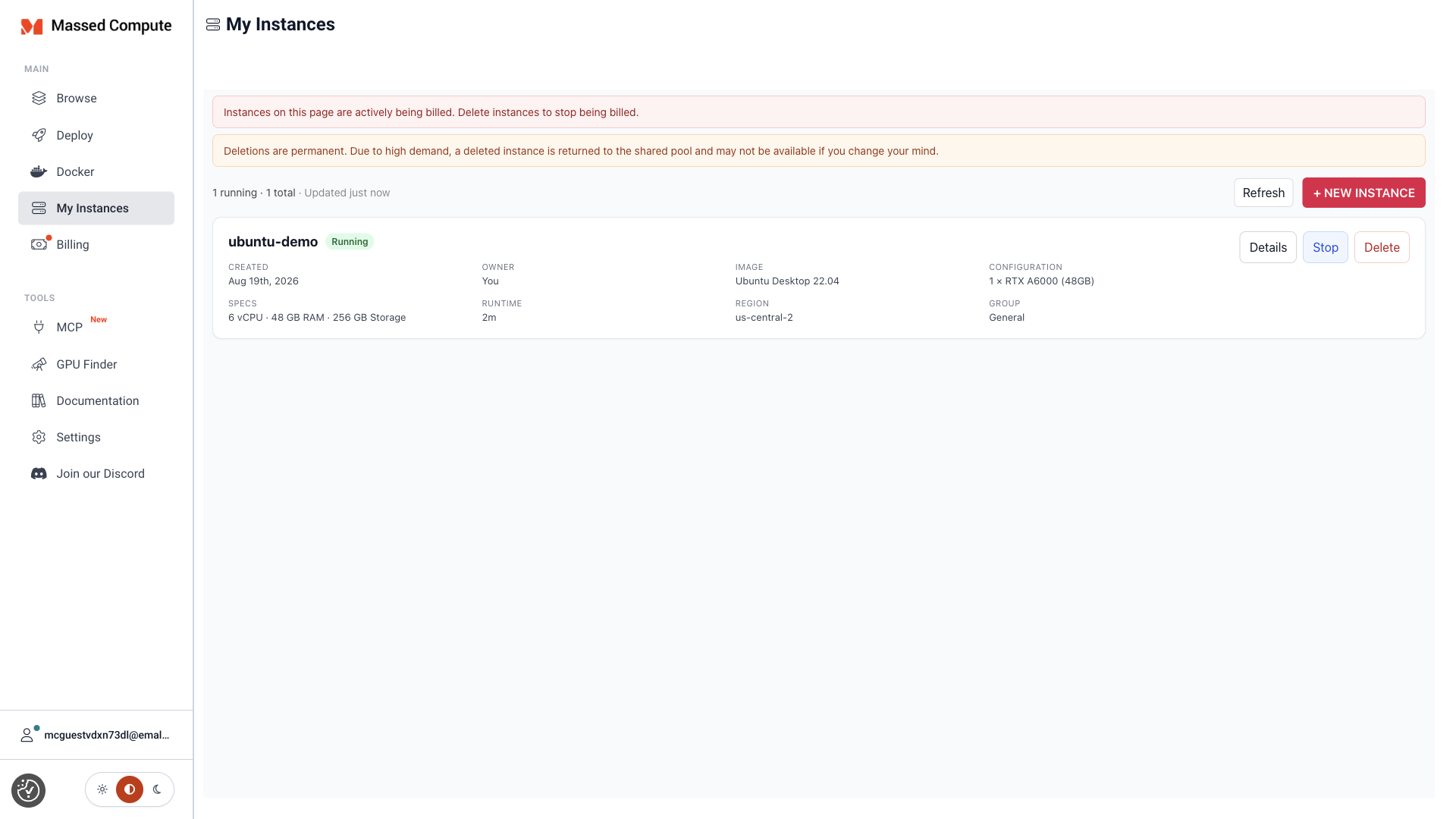
Each card shows:
- Name — editable at any time
- Status — Running, Initializing, or Stopped
- Created date, owner, and instance group (for example General)
- Image — template on the VM (see Browse for what is pre-installed)
- Configuration — GPU or CPU SKU and quantity
- Specs — vCPU, RAM, and storage
- Runtime — how long this instance has been up
- Details / Stop / Delete — expand the card, stop the VM, or permanently delete it
Status
- Running: The VM is up and you can connect.
- Initializing: The image is still booting after deploy.
- Stopped: Usually a billing issue. If a recharge fails, the remaining balance runs out and you get emails to update payment. After the balance goes negative you have 12 hours to fix it. During that window the VM is stopped. Fix billing in time and we restart it; otherwise the VM is terminated.
Stop and Delete
- Stop shuts the guest OS down. Billing continues at the full hourly rate. Delete the instance to stop being billed.
- Delete terminates the VM and deletes its data. Capacity goes back to the shared pool and may not be available if you change your mind.
Expanded view
Click Details to open connection fields.
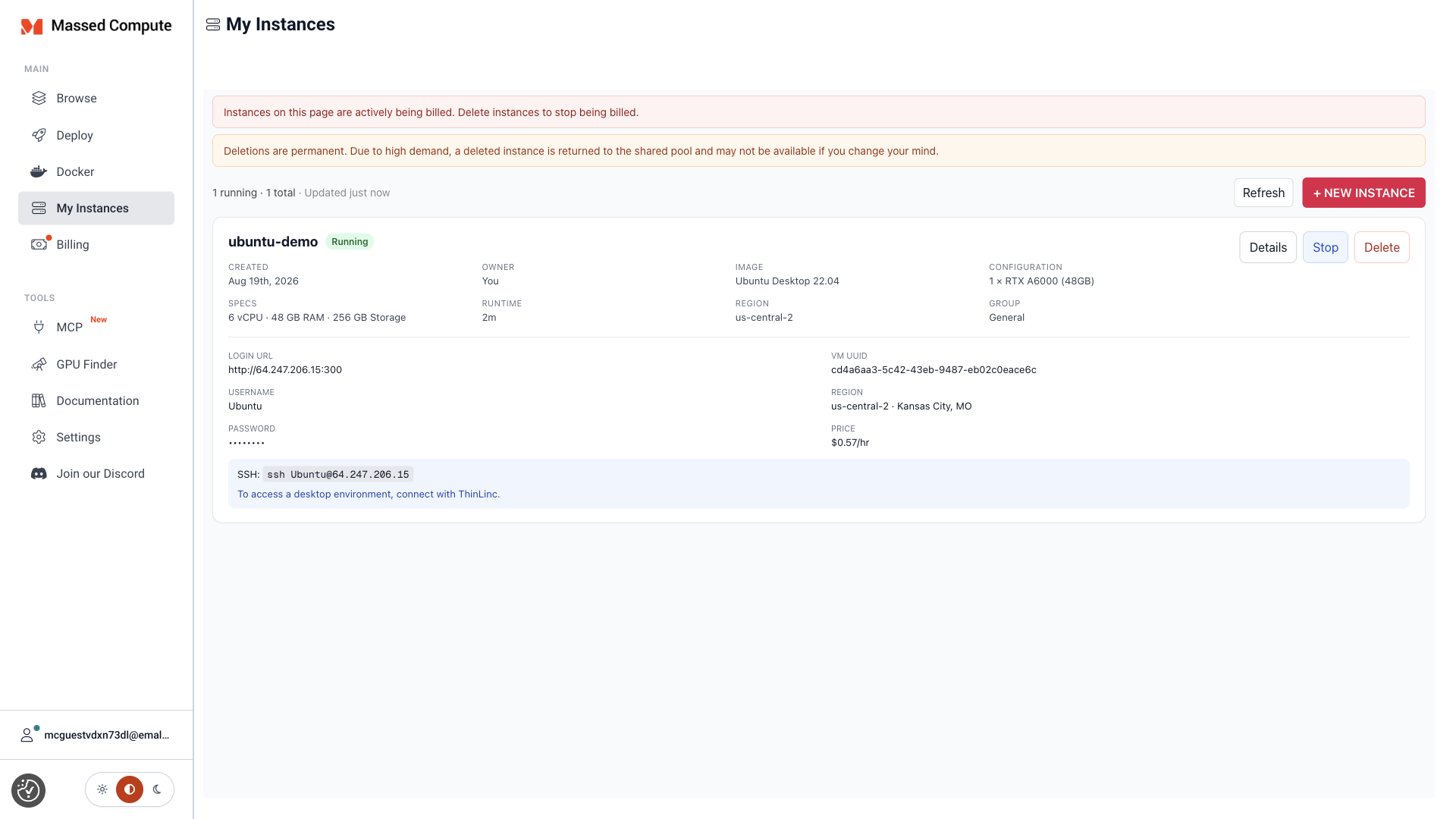
- Login URL — browser login for desktop images (ThinLinc in the browser)
- Username / Password — password is masked; use the eye icon to reveal, then copy. Change it after first login.
- VM UUID — send this to support if you need help
- Price — hourly rate for this instance
- Region — datacenter region
- SSH —
ssh Ubuntu@<ip>(or the user printed on the card). For a desktop, deploy a desktop image and connect with ThinLinc.